

Back pain can make surprisingly ordinary things difficult. Sitting at a desk, getting out of bed, driving, or bending down to pick something up may suddenly require more thought than usual.That is one reason many people explore yoga poses for back pain relief. Yoga combines movement, breathing, and body awareness, and research suggests it may provide modest benefits for some people with chronic low-back pain. However, yoga is not a cure for every type of back pain, nor is it necessarily better than other appropriate forms of exercise.
The goal, then, isn’t to twist yourself into the deepest possible stretch. It’s to explore gentle movement, notice how your body responds, and choose exercises that are appropriate for you.
Here are seven gentle yoga poses you may want to explore.
Can Yoga Help With Back Pain?
There is encouraging evidence, particularly for chronic low-back pain, but it is important to keep expectations realistic.
Research reviewed by the National Center for Complementary and Integrative Health (NCCIH) suggests that yoga may provide small improvements in pain and back-related function. Evidence also suggests that yoga may have results similar to other forms of back-focused exercise.
That distinction matters.
Yoga should not be viewed as something that automatically “fixes” an aching back. Instead, it can be considered one possible form of physical activity that combines movement with breathing and body awareness.
For some people, that may be a useful addition to a broader healthy lifestyle.
Before You Try Yoga for Back Pain
Not all back pain has the same cause.
Imagine two people with sore backs. One has been sitting at a computer for hours and feels stiff. The other developed pain following an injury. Although both might describe their problem simply as “back pain,” the movements appropriate for them may be very different.
That’s why an online yoga routine should never be treated as a diagnosis or personalized treatment plan.
Yoga is generally considered safe when performed properly, but injuries can occur. Certain health conditions, injuries, pregnancy, balance difficulties, and lumbar spine problems may also require poses to be modified or avoided.
A useful principle is simple:
Don’t force your body into pain just to complete a pose.
If a movement causes new or increasing pain, numbness, tingling, weakness, or another unusual symptom, stop and seek appropriate professional advice.
7 Gentle Yoga Poses for Back Pain Relief to Explore
These poses are not presented as treatments or as the scientifically proven “best” poses for every type of back pain.
Instead, think of them as gentle yoga movements that some people may find comfortable and useful.
01. Cat-Cow Pose
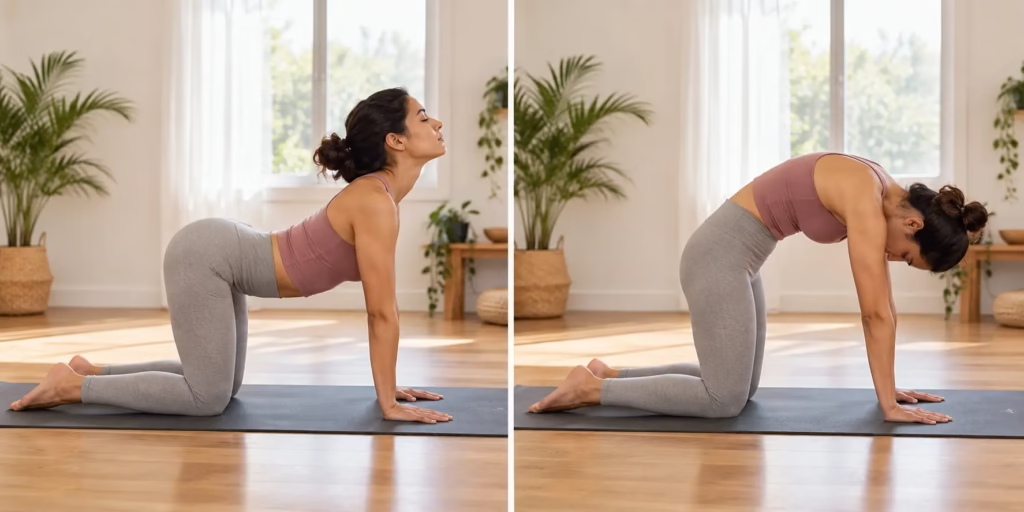
Cat-Cow gently moves the spine through rounded and extended positions.
Begin on your hands and knees. As you inhale, gently allow your chest to move forward while your abdomen lowers slightly. As you exhale, slowly round your back.
There’s no prize for creating the biggest curve.
Move only through a comfortable range and let your breathing guide the pace.
Practical tip: Try moving slowly enough to notice how different areas of your back feel rather than rushing from one position to the other.
02. Child’s Pose
Child’s Pose is often used as a resting position in yoga.
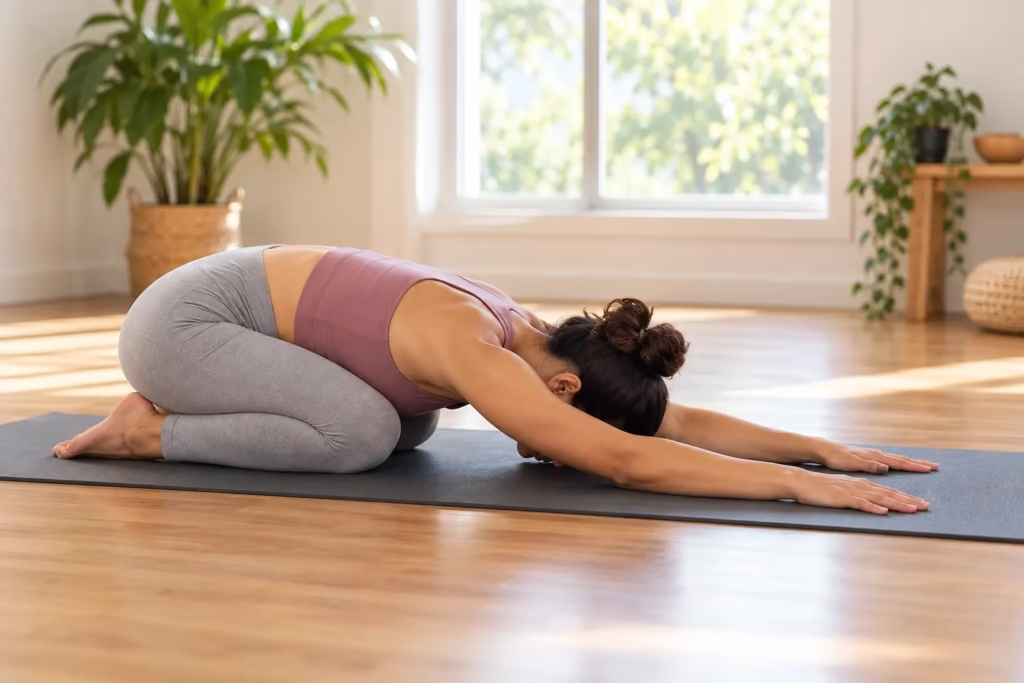
Begin on your knees and gently move your hips toward your heels while reaching your arms forward. If the position feels too deep, a cushion or bolster can provide extra support.
Your hips do not need to reach your heels.
More importantly, Child’s Pose isn’t comfortable for everyone. If it increases your symptoms, choose another resting position instead.
Remember: A famous yoga pose isn’t automatically the right pose for your body.
03. Sphinx Pose
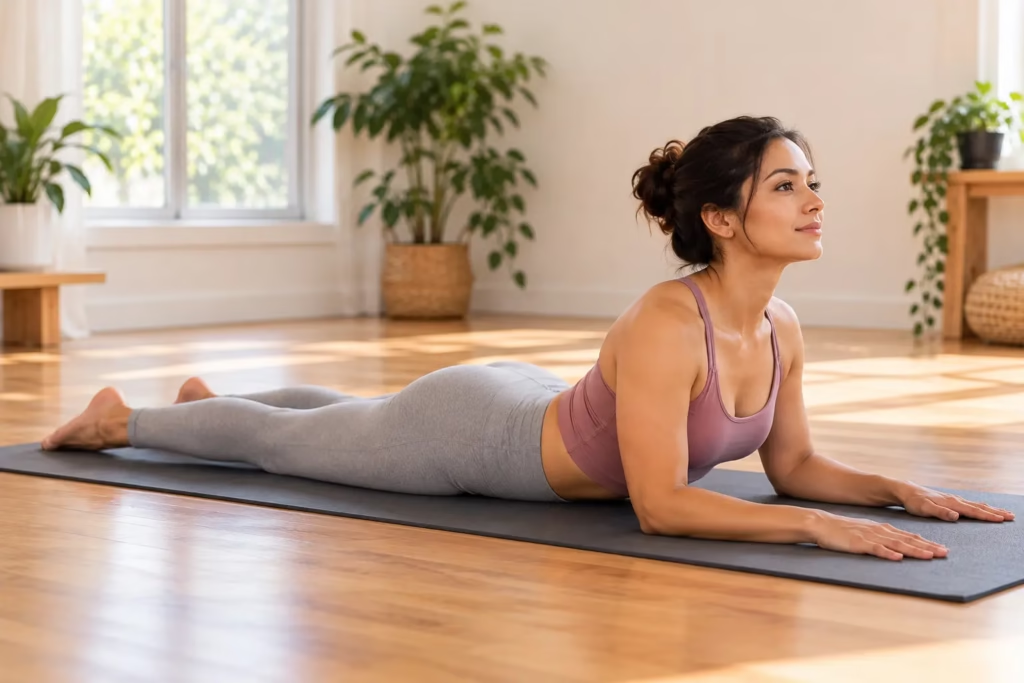
Sphinx Pose introduces gentle extension through the spine.
Lie on your stomach and place your forearms on the floor. Slowly raise your upper body while keeping your hips and lower body relaxed.
Keep the movement small at first.
Some people feel comfortable with backward-bending movements, while others don’t. If you experience increasing discomfort, don’t try to “push through” it.
04. Single Knee-to-Chest
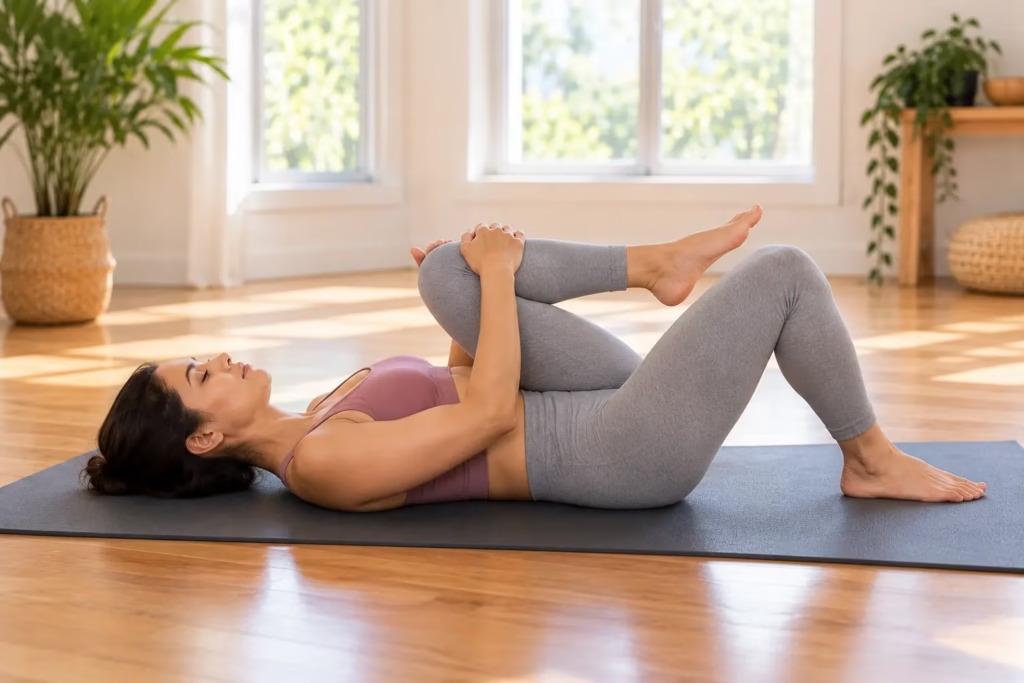
Lie comfortably on your back with your knees bent.
Slowly bring one knee toward your chest and support it gently with your hands. Avoid aggressively pulling the leg toward you.
Hold the position comfortably, release it, and then change sides.
This illustrates something worth remembering about yoga:
Gentle movement doesn’t have to feel intense to be worthwhile.
05. Gentle Supine Twist
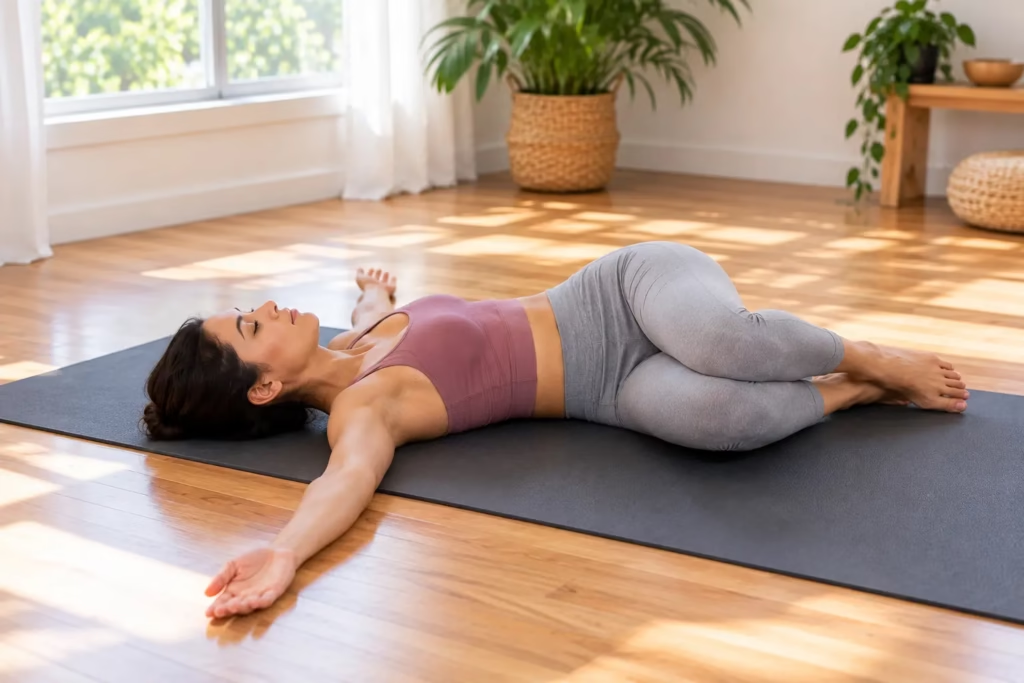
Lie on your back with your knees bent.
Slowly allow your knees to move toward one side while keeping the movement within a comfortable range. Return to the center before trying the opposite side.
Don’t force your knees toward the floor.
The goal isn’t to reproduce an impressive yoga photograph. It’s simply to explore comfortable movement.
06. Bridge Pose
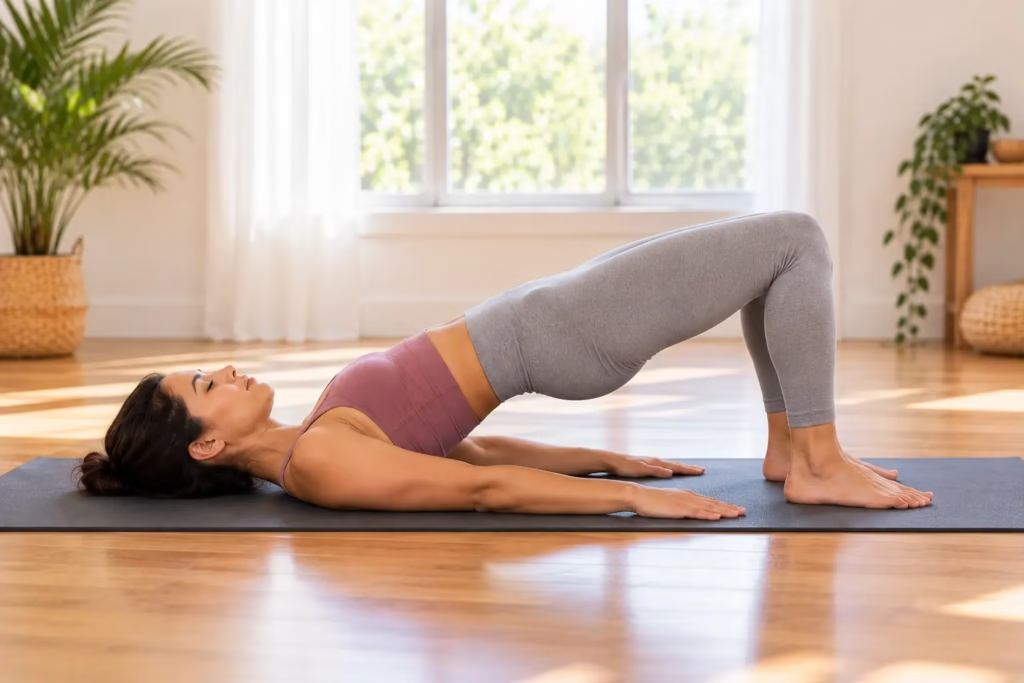
Bridge Pose adds a little more active movement.
Lie on your back with your knees bent and your feet resting on the floor. Gently press through your feet and raise your hips a comfortable distance.
Pause briefly before lowering yourself slowly and with control.
A small lift is perfectly acceptable. You don’t need to create a dramatic arch for the movement to count.
07. Legs-Up-the-Wall Pose
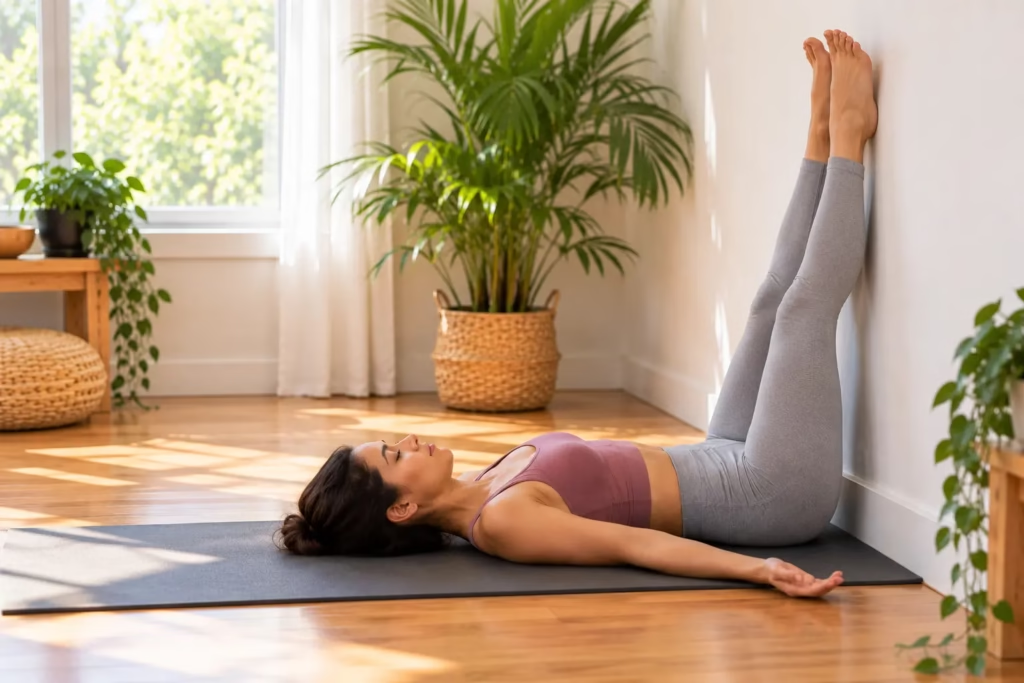
Finish with something quieter.
Lie comfortably near a wall and allow your legs to rest against it. Adjust your position until you feel supported rather than strained.
Instead of thinking of this as a direct treatment for back pain, consider it a resting and relaxation position.
Let your breathing settle. Release unnecessary tension and spend a few moments simply being still.
Try a Gentle 10-Minute Yoga Practice
You don’t need an hour-long yoga session to explore gentle movement.
You might begin with comfortable breathing before moving slowly through Cat-Cow. From there, choose one or two floor-based poses that feel comfortable, perhaps add a gentle Bridge, and finish with a relaxing position.
There is no need to complete every pose in this article.
In fact, trying to force yourself through a fixed routine simply because it appears online defeats the purpose.
Move slowly. Breathe normally. Stay within a comfortable range.
And don’t compete with the person demonstrating the pose—or with the version of yourself who may once have been more flexible.
Common Mistakes to Avoid When Practicing Yoga poses With Back Pain
A common misconception is that a deeper stretch must be a better stretch.
It isn’t.
Be cautious about forcing yourself into positions, moving too quickly, holding your breath, copying advanced poses from social media, or continuing movements that clearly worsen your symptoms.
Beginners should also be careful with extreme poses and practices. NCCIH notes that strains and sprains are among the most common injuries associated with yoga and recommends learning appropriate technique from a qualified instructor.
Think comfortable and controlled, rather than deep and dramatic.
How Often Should You Practice Yoga poses for Back Pain?
There isn’t one perfect schedule that works for everyone.
A short, comfortable routine that you can practice consistently may be more realistic than an occasional intense session. But the appropriate amount of activity depends on your health, fitness, symptoms, and the cause of your back pain.
If you’re dealing with ongoing back problems, a qualified healthcare professional, physical therapist, or appropriately trained yoga instructor can help you determine what movements and frequency may be suitable for you.
Are Yoga poses Better Than Other Exercises for Back Pain?
Not necessarily—and that’s useful information.
Research suggests that yoga may provide modest benefits for chronic low-back pain, but it doesn’t appear to clearly outperform other appropriate forms of back-focused exercise.
That means you don’t need to become an advanced yogi because someone online claims yoga is the secret to a pain-free spine.
Depending on the individual, walking, strengthening exercises, physical therapy, yoga, or other appropriate forms of movement may all have a place.
The better choice is usually something that is safe, suitable for your circumstances, and sustainable enough to continue.
When Should You Seek Professional Help?
Yoga has limits.
It shouldn’t be used to delay appropriate medical care. NCCIH specifically advises people not to use yoga to postpone seeing a healthcare provider about a medical problem.
Seek professional medical advice if your back pain is severe, persistent, worsening, follows an injury, or occurs alongside other concerning symptoms.
If you’re unsure whether yoga is appropriate for your particular back problem, asking a healthcare professional before starting is a sensible choice.
The Bottom Line
Yoga poses for back pain relief don’t need to be complicated.
Gentle movements such as Cat-Cow, supported Child’s Pose, Sphinx, knee-to-chest movements, a comfortable twist, Bridge, and restorative positions can provide options to explore. But there isn’t one yoga pose—or one routine—that is right for every aching back.
Current research suggests yoga may offer modest benefits for some people with chronic low-back pain, with results broadly comparable to other appropriate exercise.
So start gently. Pay attention to your body’s response. Don’t force painful movements, and get professional guidance when you need it.
Have you tried gentle yoga for back discomfort? Share your experience in the comments, and explore more evidence-informed wellness guides from ScopoGen.
Disclaimer: This article is for general educational and informational purposes only and is not medical advice. Back pain can have many causes. If your pain is severe, persistent, worsening, follows an injury, or is accompanied by other concerning symptoms, seek advice from a qualified healthcare professional.